AGENTFORCE & AI
Give AI a job worth doing.
We help you choose the right task, define the data and permissions it needs, and build a controlled path from pilot to day-to-day operations.
Typical starting point: There is pressure to “do something with AI”, but the task is still vague, the required data is unclear and nobody has defined what the system should or should not be allowed to do.
 AI-generated
WHEN NOT TO START YET
Signs the AI use case is not ready for a pilot.
A pilot is useful only when the task, constraints and expected outcome are specific enough to test.
The task is still vague
- The goal is “use AI” rather than improve a specific piece of work.
- Nobody can describe what a good result should look like.
The boundaries are unresolved
- It is unclear what data the AI may access or what actions it may perform.
- There is no defined point where a person must take over.
The operating model is missing
- No owner has been named for quality, monitoring or changes.
- The team has not agreed how failures, edge cases or escalation should be handled.
 AI-generated
START WITH THE USE CASE
Define the task before choosing the AI.
Before prompts, models or Agentforce configuration, agree on the work that should improve and the conditions under which AI is actually the right tool.
What specific task should become faster, easier or more consistent
What input data and knowledge the task really needs
What a good output looks like and how it will be evaluated
Which actions may be automated and which require review
When the AI must stop and hand over to a person
Who owns quality, monitoring and later changes
FROM TASK TO ACTION
How a controlled AI use case should work.
A useful AI flow makes every step explicit: what goes in, what the system may do and when a person needs to take over.
TaskWhat work should the AI support?
ContextWhich data, records or knowledge may it use?
DecisionWhat should the AI infer, classify or prepare?
ActionWhich action may it take — if any?
HandoffWhen must a person review or take over?
OutcomeHow will quality and business value be measured?
 AI-generated
WHAT GOOD LOOKS LIKE
What an AI use case looks like when it is worth operating.
The goal is not an impressive demo. It is a bounded use case that creates enough value to justify the data, monitoring and operating effort behind it.
The task is specific and happens often enough to matter.
The required data and knowledge are available and trustworthy enough for the use case.
The expected output can be checked against meaningful criteria.
Allowed actions and permission boundaries are explicit.
Human handoff is designed into the flow rather than added later.
The operating cost and risk are proportionate to the value created.
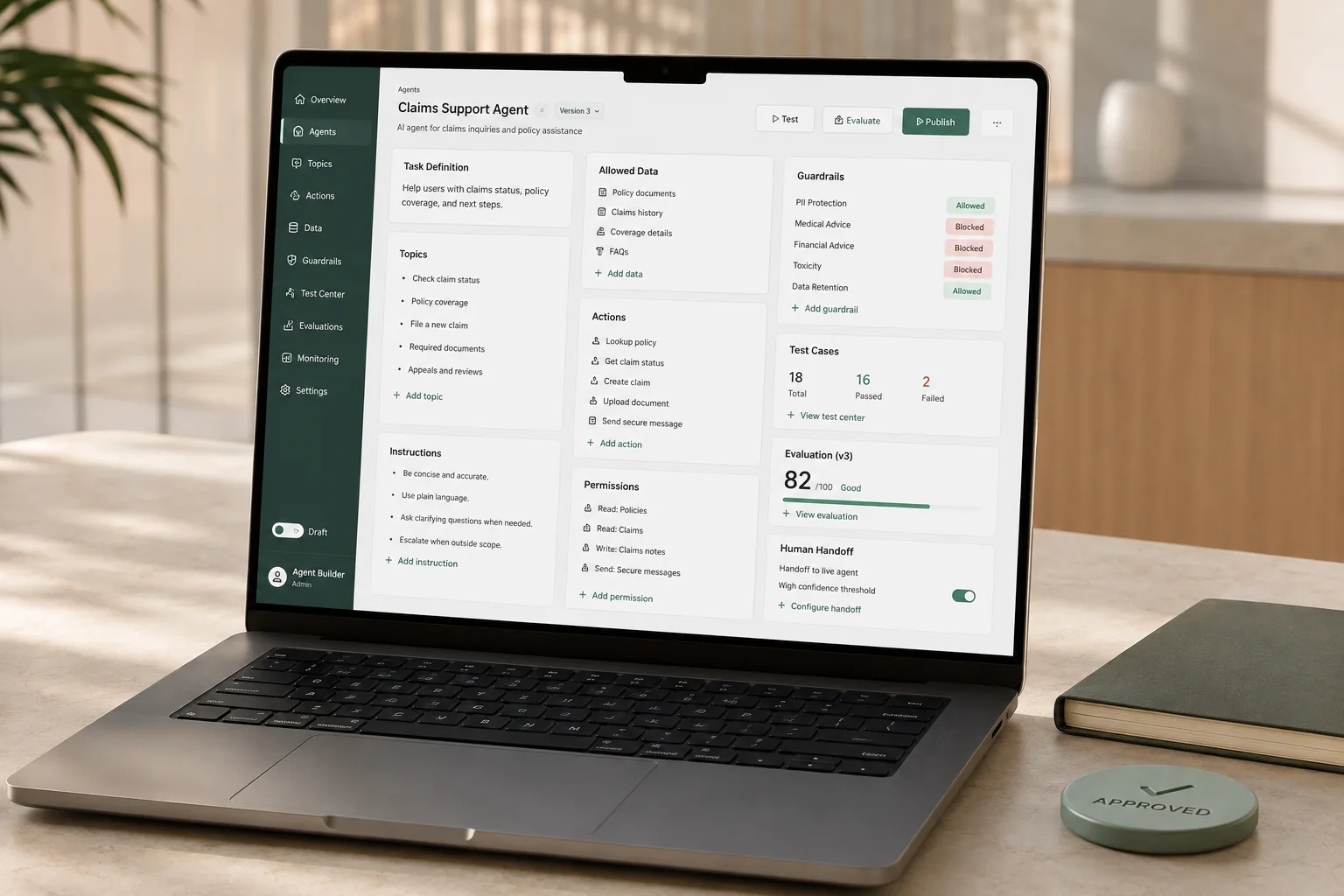
BEFORE YOU BUILD
Questions worth answering before the first pilot.
AI complexity grows quickly when the technology is selected before the task, limits and operating model are agreed.

Fit
Is AI actually the right tool for this task?
- Could a simpler workflow, search improvement or deterministic automation solve the problem better?
- Is there enough repetition and business value to justify a pilot?
Control
Are data access and actions deliberately bounded?
- What may the AI read, prepare, decide or execute?
- Which situations require review, approval or immediate human handoff?
Lifecycle
How will the use case be operated and changed?
- Who monitors quality, failures and business impact?
- How are model, prompt, data or action changes tested before release?
 AI-generated
USEFUL DELIVERABLES
Outputs business and IT can keep using.
The work should leave behind a shared AI operating model — not a demo that only the pilot team understands.
Prioritized AI use case with success and stop criteria
Data, knowledge, permission and action boundaries
Evaluation, human-handoff and monitoring model
Pilot roadmap, open decisions and production-readiness criteria
HOW WE GET THERE
From AI idea to a use case teams can operate.
Start with one bounded task, test it against real cases and put ownership around the use case before expanding what the AI is allowed to do.
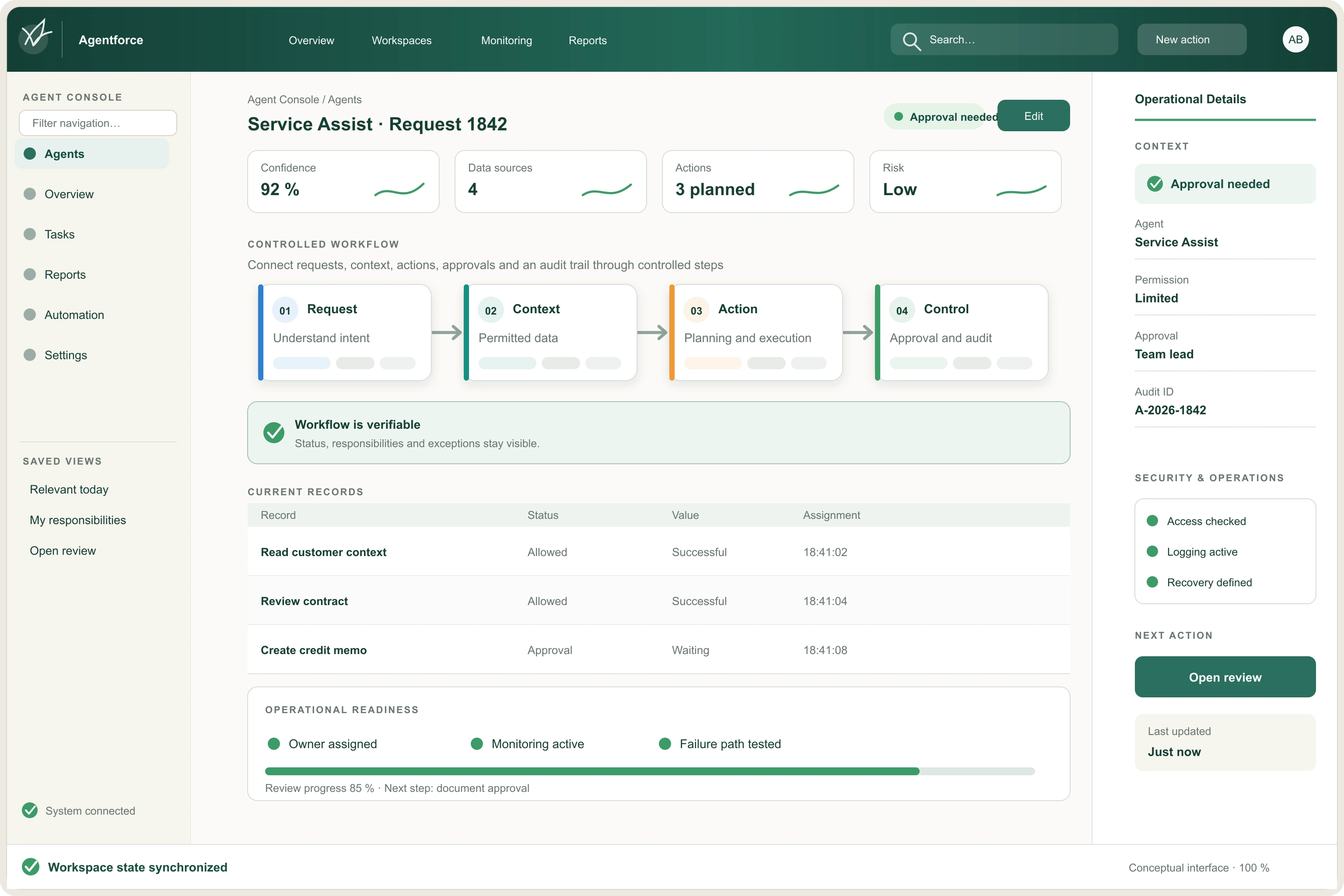
Qualify
Choose a task with a real business need, enough repetition and a measurable outcome.
Scope
Define data, permissions, actions, boundaries and human handoff.
Evaluate
Test real cases, edge cases and failure scenarios against agreed criteria.
Operate
Put monitoring, ownership and change control in place before increasing the scope.
 AI-generated
Which AI use case is worth taking to production?
If you have an AI idea but the task, data, boundaries or production criteria are still unclear, we can help turn it into a use case you can test properly.