SALESFORCE PLATFORM & ARCHITECTURE
When Salesforce gets hard to change.
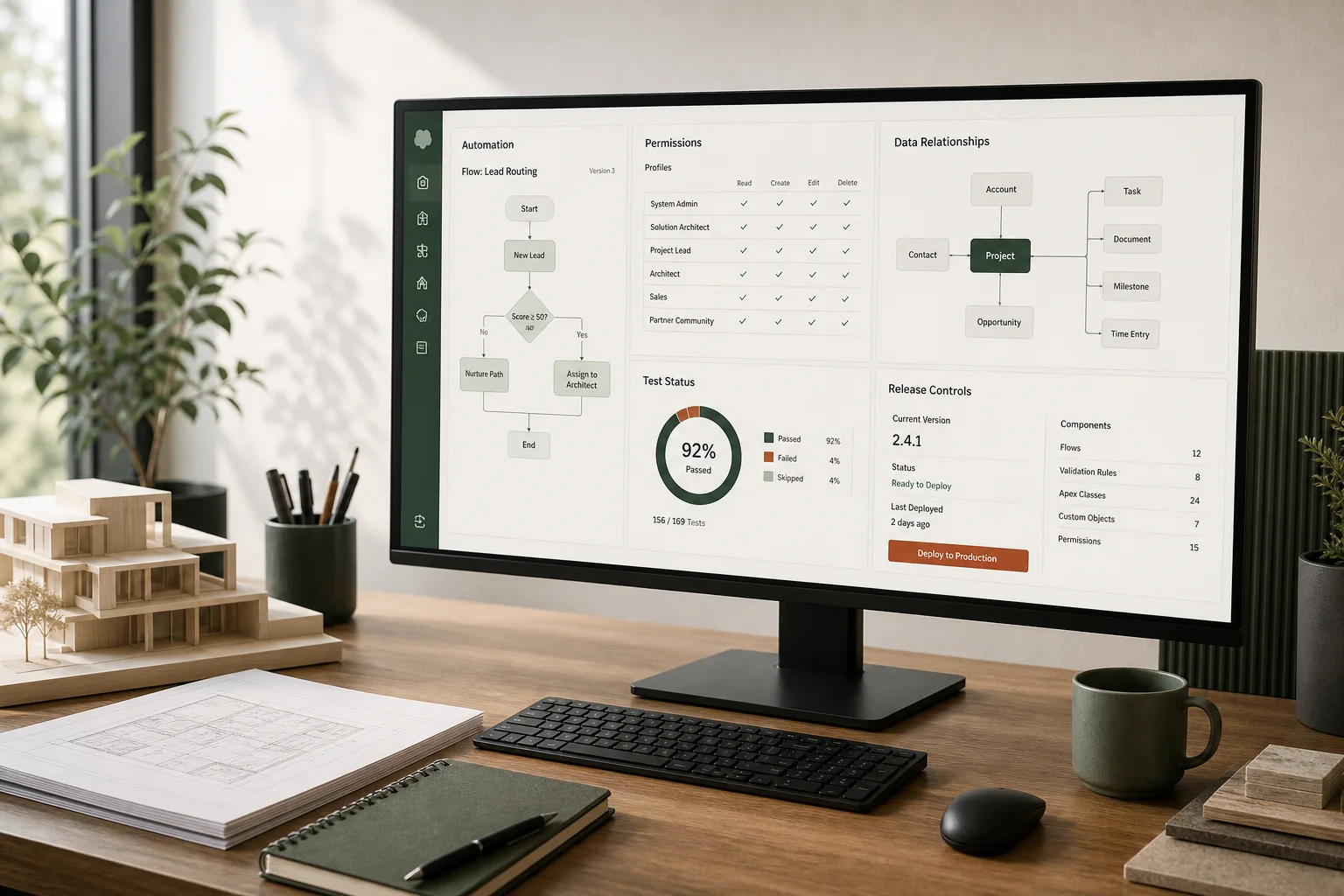
We help you untangle automation, permissions, data models and custom logic so changes become easier to plan, test and release — without breaking what already works.
Typical starting point: Small changes take too long because too many automations, dependencies and exceptions have grown around the original design.

WHERE COMPLEXITY SHOWS UP
Where Salesforce starts slowing the team down.
Platform complexity is usually felt long before anyone calls it an architecture problem. It shows up in slower changes, harder testing and growing uncertainty about what depends on what.
Structures overlap
- Similar automation or logic exists in several places.
- Teams are no longer sure which rule is actually driving the outcome.
Changes take more effort
- A small request triggers broader analysis, coordination and regression testing.
- The cost of change keeps rising even when the feature itself is simple.
Ownership becomes unclear
- Platform, business and integration responsibilities overlap.
- Teams hesitate to change components because the consequences are not obvious.
 AI-generated
START WITH THE CURRENT STATE
Understand what is driving the complexity first.
Before redesigning anything, identify which structures still serve the business and which ones now create unnecessary friction.
Which processes and journeys are genuinely business-critical
Where automation is duplicated, overlapping or difficult to trace
Which permissions and access rules have become hard to manage
Where the data model creates avoidable dependencies
Which custom logic still has a clear reason to exist
Which teams own platform decisions, releases and support
DEPENDENCIES MATTER
One Salesforce change rarely stays in one place.
A field, permission or automation change can affect screens, integrations, reports, service processes and downstream logic at the same time.
User experienceWhat changes for the people using Salesforce?
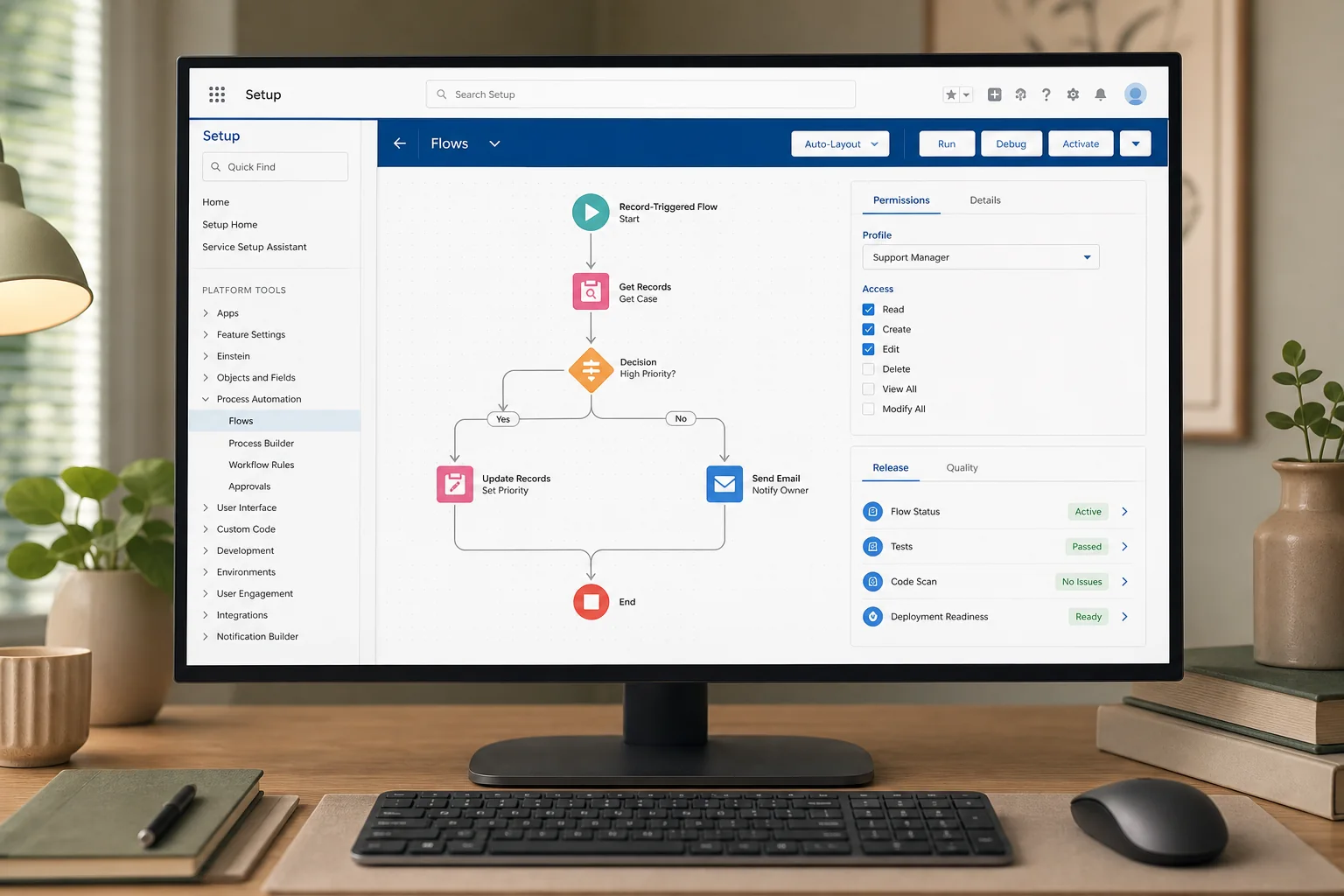
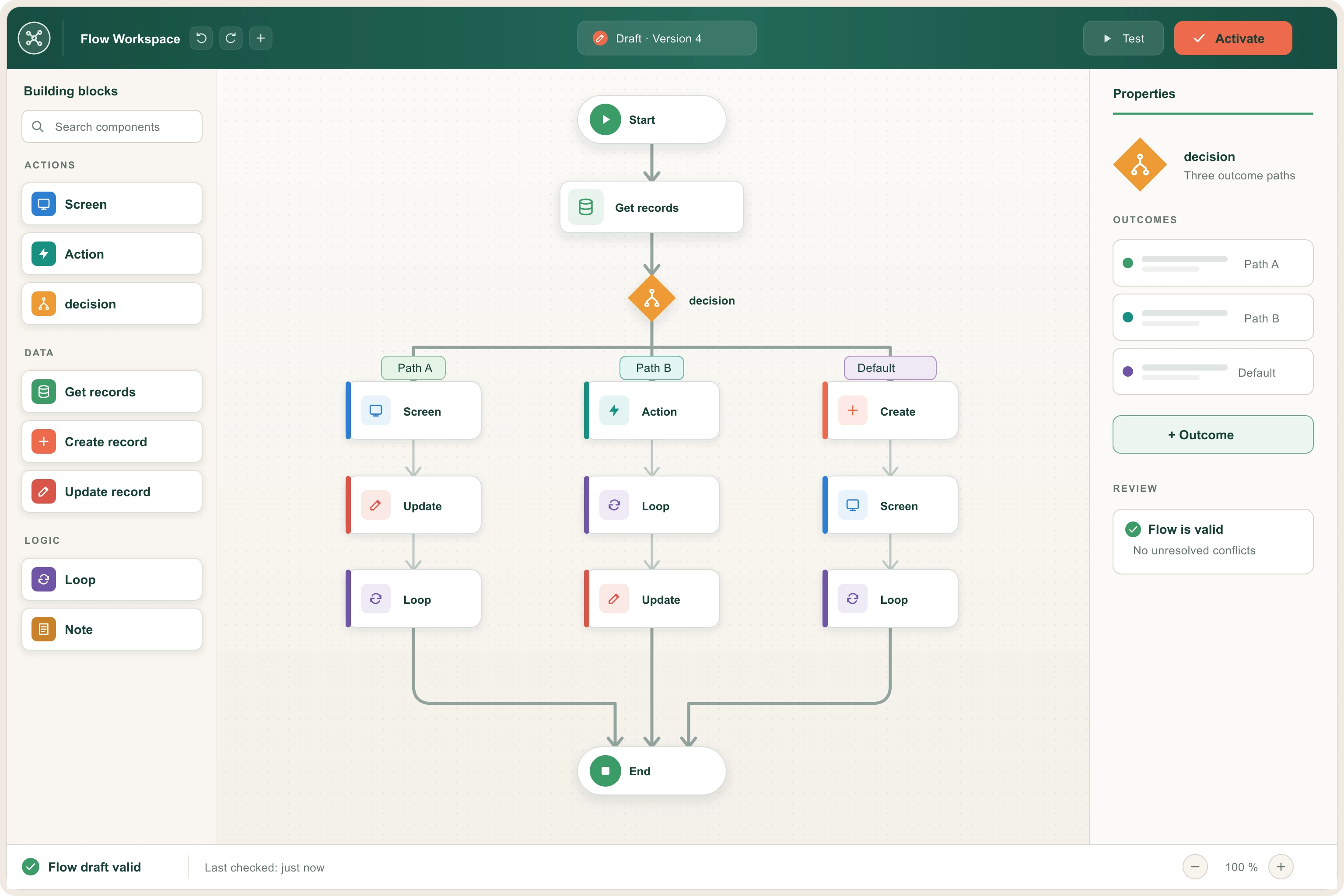
AutomationWhich flows, rules or background processes depend on it?
PermissionsWho gains or loses access as a result?
Data modelWhich objects, fields and relationships are affected?
IntegrationsWhat changes for connected systems or APIs?

WHAT GOOD LOOKS LIKE
What progress looks like in a complex Salesforce org.
Success is not a perfectly clean org. It is a platform where teams can explain the design, assess changes and release with less uncertainty.
Changes have an obvious owner and impact area.
Automation is easier to trace and test.
Permissions follow understandable patterns instead of one-off exceptions.
Custom logic exists for a documented reason.
Teams can release without depending on one person’s memory of the org.
BEFORE YOU CHANGE THE PLATFORM
Platform decisions should still make sense a year from now.
The best solution is not only technically correct today. It should still be understandable when the next team needs to change it.
 AI-generated
Fit
Does the design match the actual business need?
- Can the platform standard handle the requirement well enough?
- If custom logic is needed, is there a clear reason for it?
Control
Can the team understand and change it safely?
- Are ownership, testing and release responsibilities explicit?
- Can dependencies be traced without relying on individual knowledge?
Lifecycle
How will this decision age?
- What happens when Salesforce, integrations or business requirements change?
- Will the design remain supportable and upgradeable?
USEFUL DELIVERABLES
Outputs your team can keep using.
The work should leave behind decisions and architecture your team can use after the engagement — not recommendations that live only in slides.
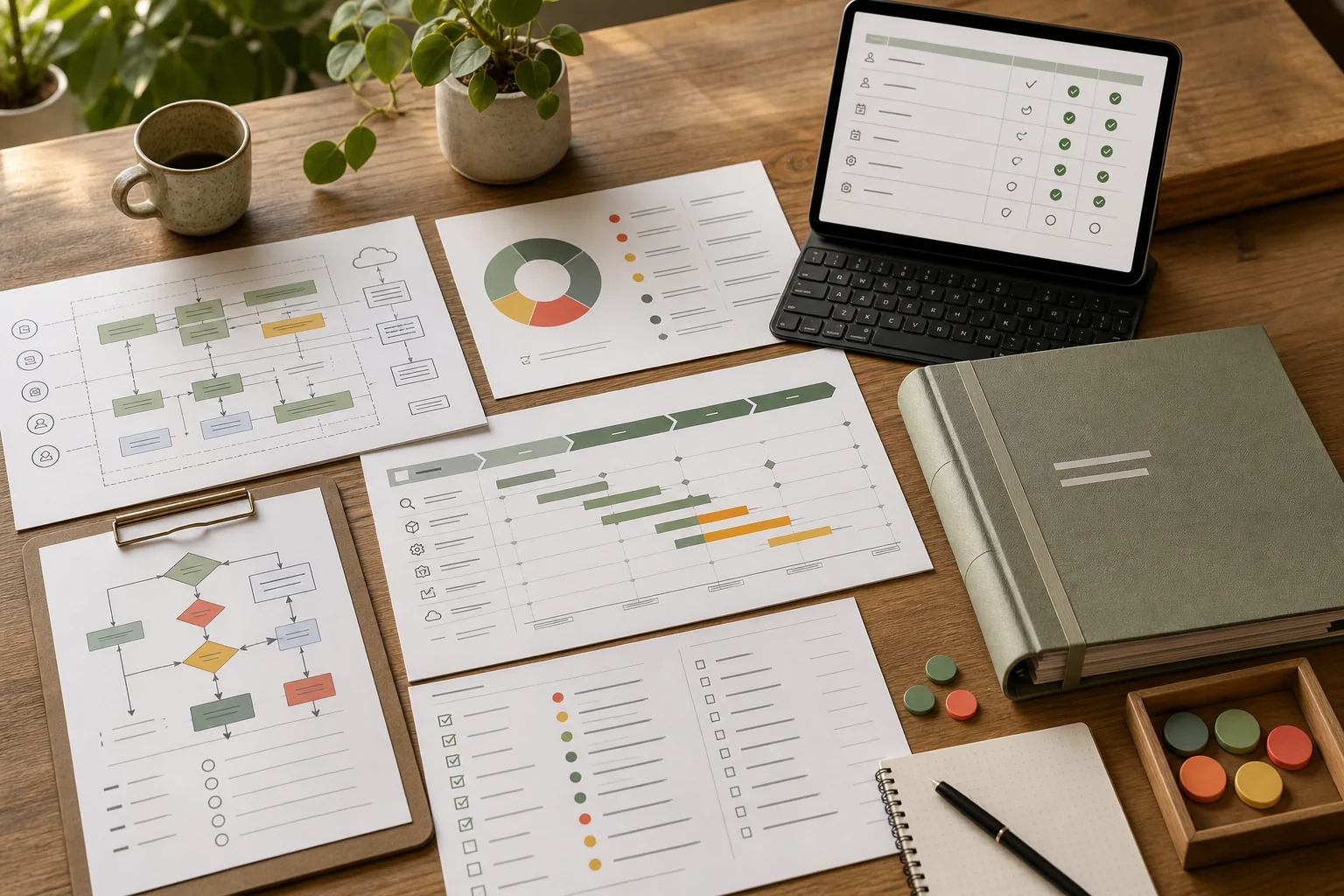
Architecture and dependency map for the relevant platform area
Documented decisions with rationale and trade-offs
Prioritized changes with dependencies and release impact
Standards for automation, permissions and custom logic
Testing, release and ownership guidance
HOW WE GET THERE
Make Salesforce easier to change again.
Start with the areas creating the most friction, make the important decisions visible and improve the platform in controlled steps.
Understand
Map the current setup, dependencies and the changes that cause the most effort.
Decide
Choose what to keep, simplify, replace or standardize.
Implement
Apply the agreed changes in small, testable releases.
Stabilize
Put ownership, testing and operating standards in place for future changes.
Planning a Salesforce change?
If a small request is turning into a large delivery effort, we can help identify the dependencies, make the trade-offs visible and find the simplest sensible path forward.