LOYALTY & CUSTOMER RETENTION
Loyalty customers understand. Teams can run.
We turn tiers, earning rules, benefits, partners and member service into one operating model — so the program stays easy to explain and manageable as it grows.
Typical starting point: The program has grown over time. Rules overlap, exceptions multiply and even simple member questions now take too much manual work to answer.
 AI-generated
WHERE IT STARTS TO BREAK DOWN
Where loyalty starts getting hard to run.
Most loyalty complexity does not arrive all at once. It grows through new benefits, partners, exceptions and rules added over time.
Rules become hard to follow
- Points, tiers and benefit rules have accumulated over time.
- Different teams interpret the same rule differently.
Partner processes develop gaps
- Earn, burn, settlement or partner responsibilities are not consistently defined.
- Exceptions fall back to manual work and individual knowledge.
Member questions become hard to answer
- Service teams cannot quickly explain a status, balance or missing benefit.
- Answers depend on manual research across rules, transactions and partner data.
 AI-generated
START WITH THE MODEL
Define the loyalty model before the platform.
Before configuring products or automations, agree on the member promise and the rules that make it work. The platform should express the model — not invent it.
What members should earn, unlock or receive
How points, status and tiers are calculated
Which benefits are available at each level
How exceptions and manual corrections are handled
What partners own and what 360Node / Salesforce needs to coordinate
What service teams need to explain a member’s current state
THE LOYALTY JOURNEY
Turn loyalty rules into a journey people can follow.
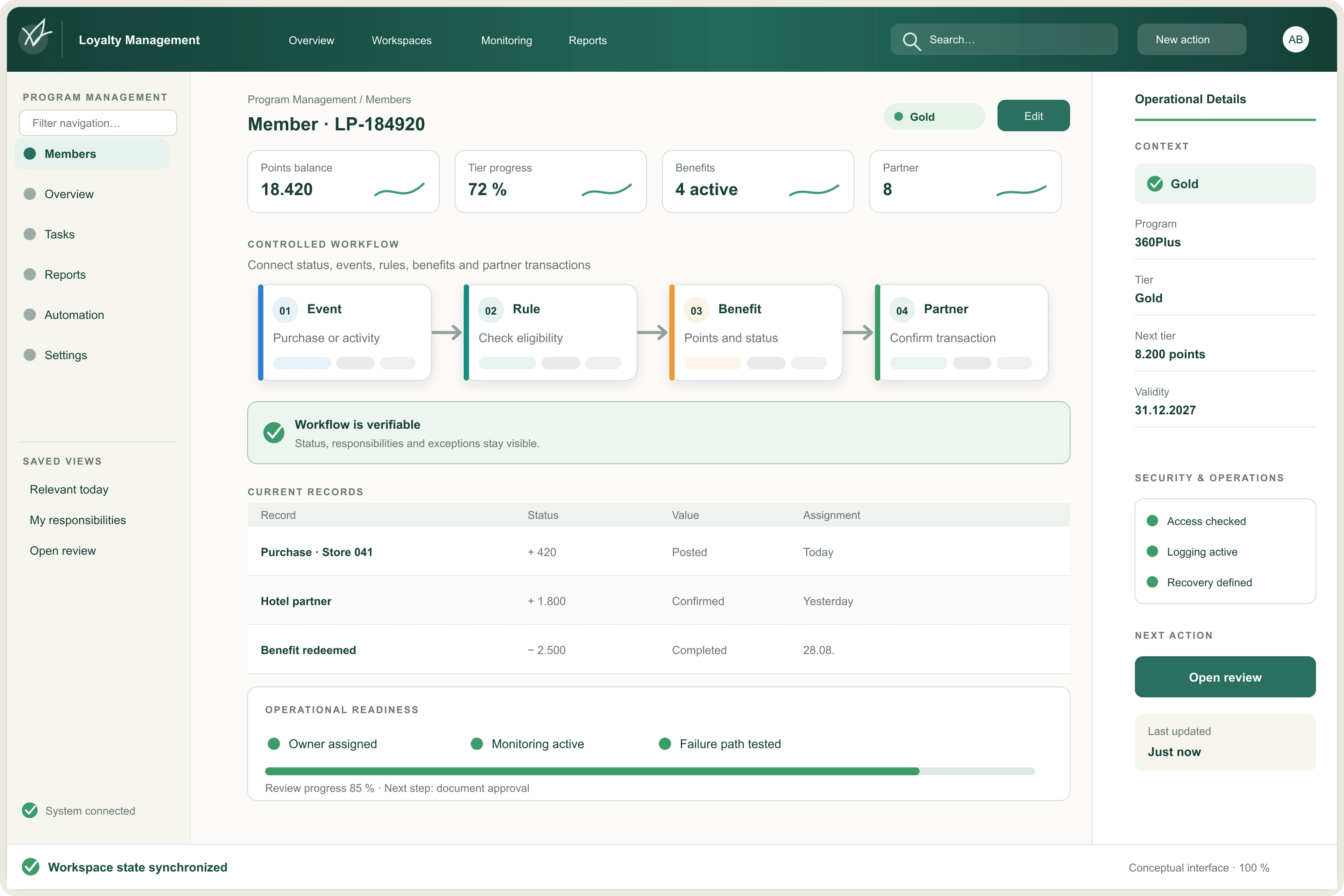
Members should be able to understand what they have, what they can earn next and why something changed. Teams need the same logic behind the scenes.
MemberWho is enrolled and which customer identity does the program use?
StatusWhat level is the member in — and what moves them up or down?
RulesHow are points, qualification and exceptions calculated?
BenefitsWhat does the member actually receive and when?
Partners & settlementHow are partner earning, redemption and financial responsibilities handled?
 AI-generated
WHAT GOOD LOOKS LIKE
What a loyalty program looks like when it is under control.
The goal is not more program mechanics. It is a model customers can understand and teams can operate without relying on spreadsheets or tribal knowledge.
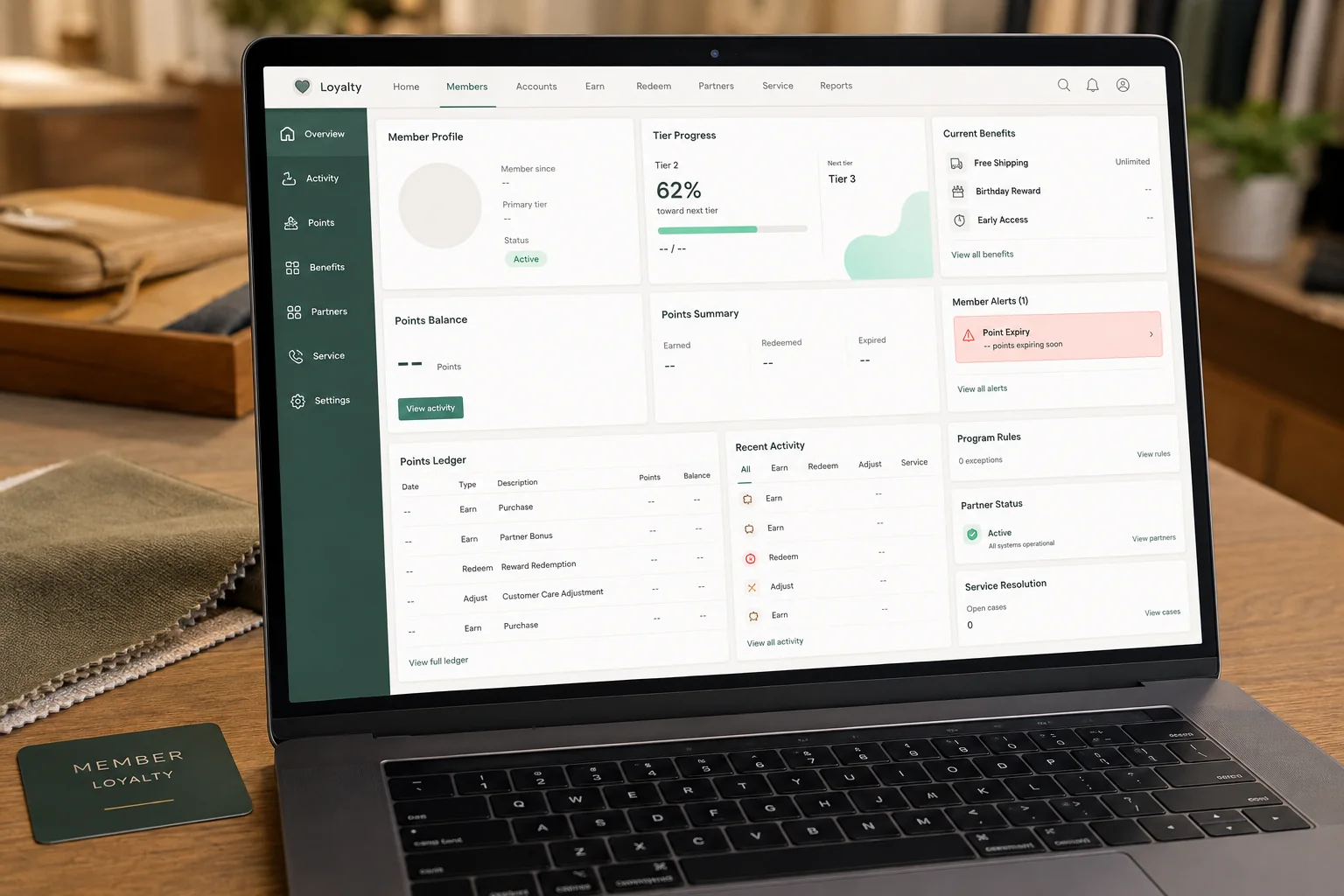
Members can understand their status, balance and benefits.
Teams can explain why points, status or eligibility changed.
Service can resolve exceptions without reconstructing the program manually.
Partner earning, redemption and settlement follow defined rules.
Changes can be tested and introduced without losing the history behind them.
BEFORE YOU BUILD
Questions worth answering before configuration starts.
Loyalty complexity becomes expensive when rules are added faster than teams can explain, test and operate them.

Fit
Does the mechanic create real member value?
- Are tiers, earning rules and benefits simple enough to explain?
- Does the complexity support the proposition — or only add administration?
Control
Can exceptions be handled deliberately?
- Who can correct balances, status or eligibility — and on what evidence?
- Which changes or partner disputes require approval?
Lifecycle
What happens when the program changes?
- How do new benefits, partners or rules affect existing members?
- How are migrations, expiry and rule changes tested and communicated?
 AI-generated
USEFUL DELIVERABLES
Outputs teams can keep using after the project.
The work should leave behind a shared loyalty model — not knowledge that only exists in workshop notes or configuration.
Program model covering tiers, earning, redemption and benefits
Roles and ownership across business, service, partners and IT
Data and integration requirements for member state and transactions
Prioritized roadmap, open decisions and operating rules
HOW WE GET THERE
From loyalty idea to an operating model.
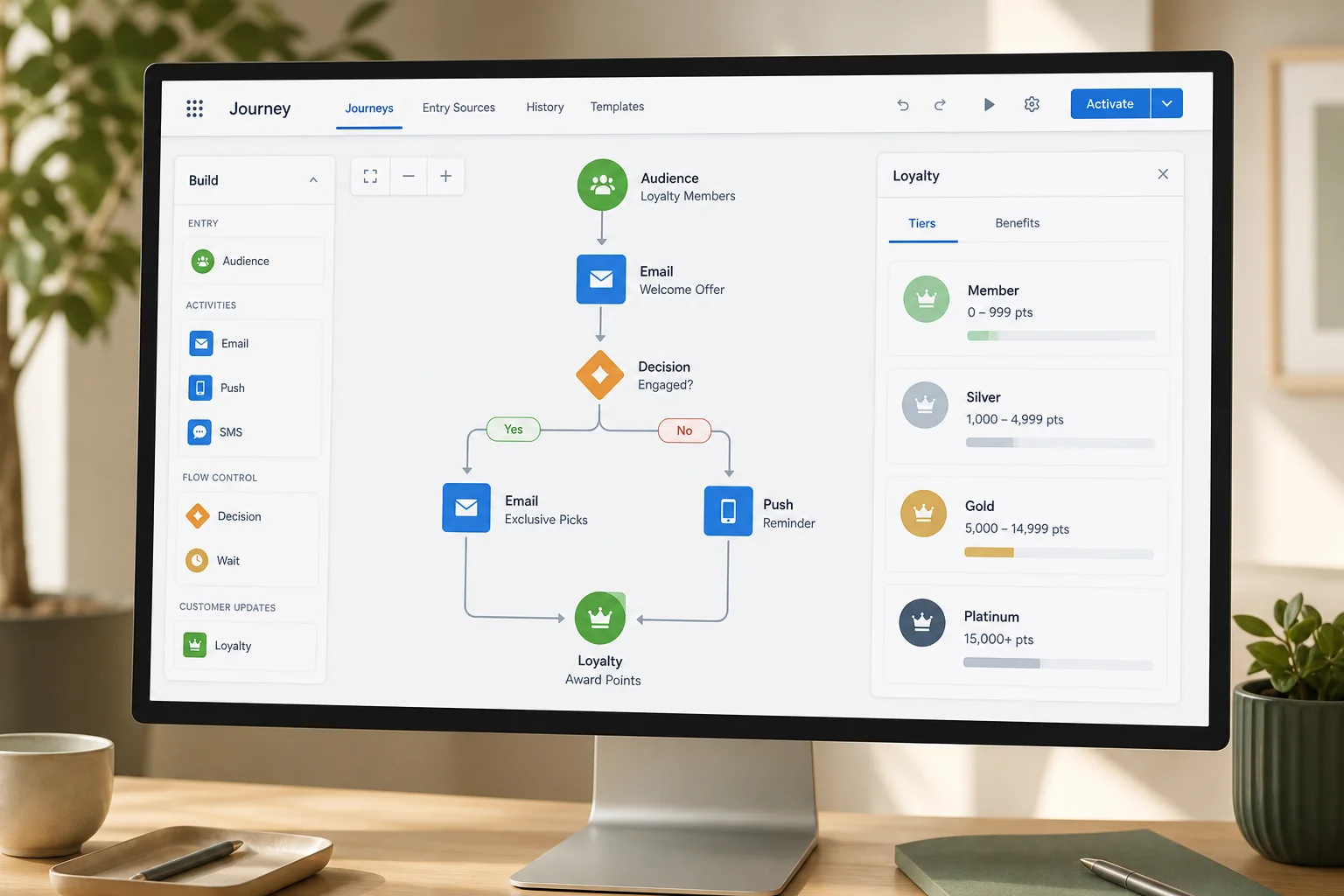
Start with the member promise, turn it into rules and ownership, connect the required systems and build a model teams can run and improve.
Clarify
Define the member promise, business goal and measures of success.
Model
Turn the proposition into tiers, earning rules, benefits and exceptions.
Connect
Link CRM, channels, partners, service and the data the program needs.
Manage
Run changes, corrections, support and reporting with clear ownership.
Which part of your loyalty program is hardest to explain?
If rules, benefits, partner processes or member exceptions have become difficult to manage, we can help turn them into a loyalty model teams can run with confidence.