MARKETING CLOUD & AUTOMATION
Marketing automation teams can actually run.
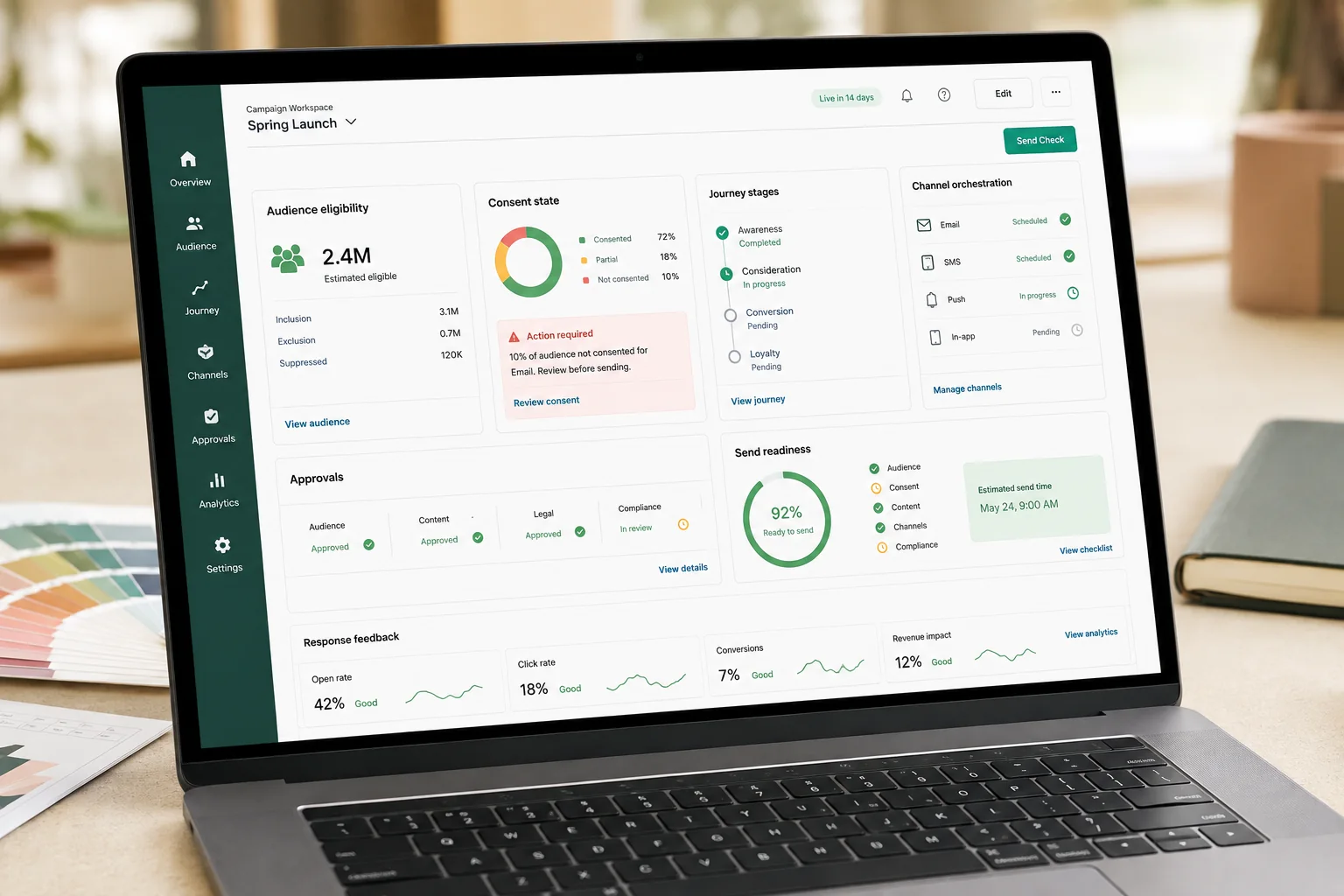
We bring audiences, consent, journeys, channels and feedback into one operating model — so automation stays useful without becoming harder to maintain every month.
Typical starting point: Audiences are rebuilt manually, journeys have grown over time and teams are no longer sure which rules, exclusions or data sources drive each campaign.
 AI-generated
WHERE MARKETING STARTS TO DRIFT
Where marketing automation starts getting hard to manage.
Complexity usually builds gradually: more audiences, more journeys, more exceptions and more data rules layered on top of one another.
Audiences drift apart
- Teams rebuild similar segments in different places.
- Targeting logic no longer means the same thing across campaigns.
Journeys become fragile
- Small data or content changes break logic several steps downstream.
- Teams avoid changing working journeys because dependencies are hard to trace.
Feedback is missing
- Campaign results do not flow back into the next audience or journey decision.
- Teams measure sends and clicks but struggle to connect them to the next useful action.
 AI-generated
START WITH THE MARKETING MODEL
Define the marketing logic before building more journeys.
Before adding automation, agree on who the audience is, which consent rules apply and what the journey is meant to achieve.
Which customer or member groups matter for the use case
Which consent, suppression and eligibility rules apply
Which event or business signal should start the journey
What content and channels are actually needed
What should happen after the customer responds — or does not
Who owns audience logic, journey changes and campaign operations
FROM GOAL TO JOURNEY
Turn a marketing goal into a journey teams can operate.
A useful journey connects the right audience, trigger, content and next step — without hiding the rules behind the automation.
AudienceWho should receive the journey?
TriggerWhat event or condition should start it?
JourneyWhich sequence of steps is actually needed?
ChannelWhere should each message or action happen?
Response & feedbackHow should behavior influence the next step?
 AI-generated
WHAT GOOD LOOKS LIKE
What marketing automation looks like when it is under control.
The goal is not more journeys. It is a smaller number of automations teams can explain, operate and improve with confidence.
Audiences are built from agreed data and eligibility rules.
Consent and suppression logic are visible and consistently applied.
Journeys have named owners and understandable entry and exit conditions.
Content and channel dependencies are known before release.
Customer responses feed into the next marketing or service decision where useful.
Teams can change a journey without rediscovering how it works each time.
BEFORE YOU BUILD
Decide what Marketing Cloud should own — and what it should not.
Marketing Cloud becomes difficult to operate when audience logic, consent, transformation and campaign execution are mixed together without clear boundaries.

Fit
Does this responsibility belong in Marketing Cloud?
- Should the platform own the logic, or should it consume a result prepared elsewhere?
- Is the solution simple enough for the team that will maintain it?
Control
Can the team manage audiences, consent and changes deliberately?
- Who can change segmentation, suppression or journey logic?
- How are high-impact changes reviewed and tested before release?
Lifecycle
How will the marketing model evolve?
- How are new channels, audiences and journeys introduced?
- How are old automations retired without leaving hidden dependencies behind?
 AI-generated
USEFUL DELIVERABLES
Outputs marketing and IT can keep using.
The work should leave behind a shared marketing operating model — not journey logic that only one implementation team understands.
Audience and consent model for the relevant use cases
Journey, trigger and channel design with ownership
Data and integration requirements for campaign execution
Testing, release and change principles
Prioritized roadmap, open decisions and operating standards
HOW WE GET THERE
From marketing goal to automation teams can run.
Start with one meaningful objective, design only the audience and journey logic it needs, then use feedback to improve before adding more complexity.
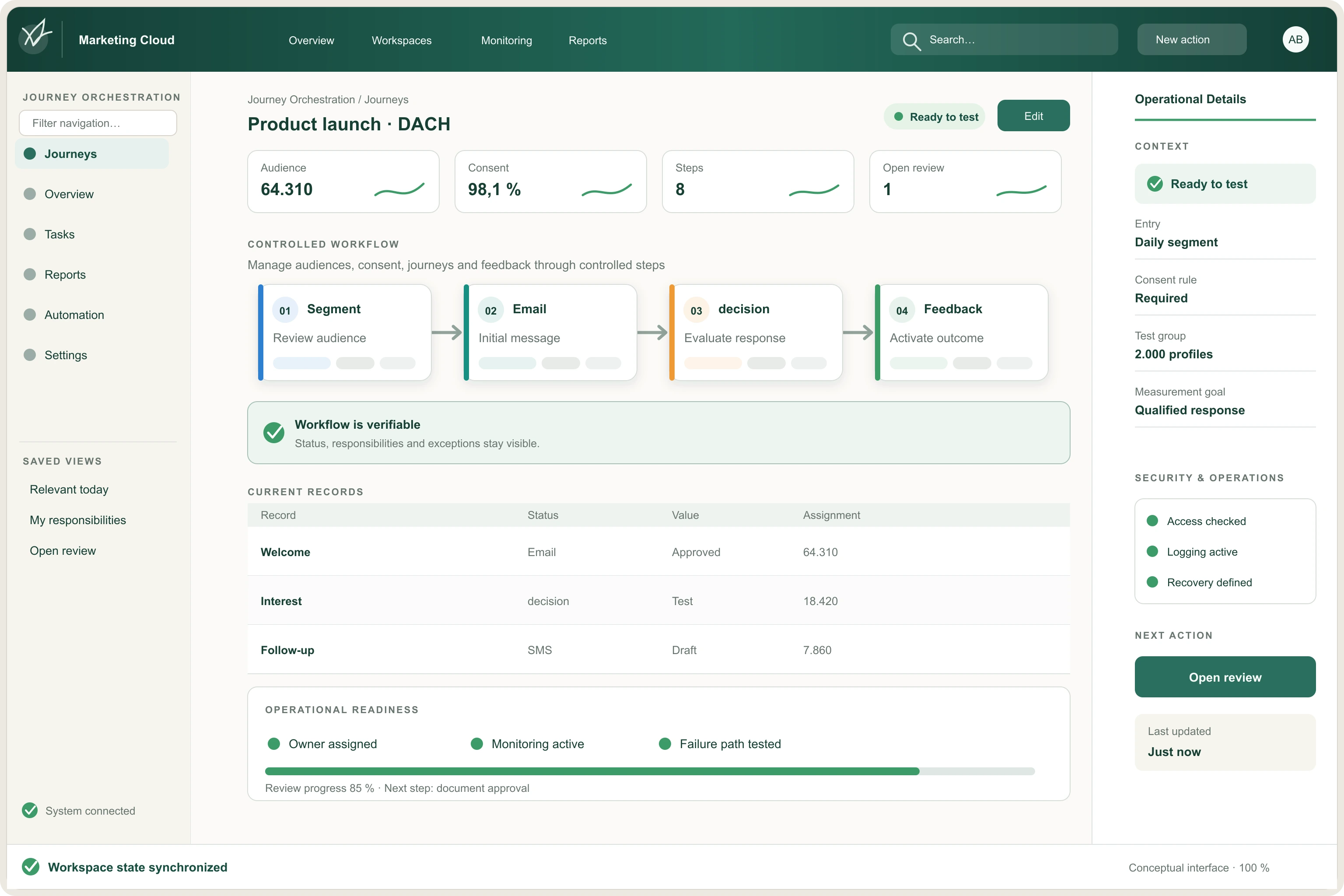
Prioritize
Choose the marketing objective and use case worth improving first.
Organize
Define audience, consent, trigger, data and channel responsibilities.
Automate
Build the journey in controlled steps with testable entry, exit and exception logic.
Learn
Use results and operational feedback to improve the next journey decision.
 AI-generated
Where is your marketing automation getting hard to manage?
If audiences drift, journeys have become fragile or nobody is sure which rules still matter, we can help simplify the model behind the automation.