REVENUE & QUOTE-TO-CASH
Quote-to-cash without the workarounds.
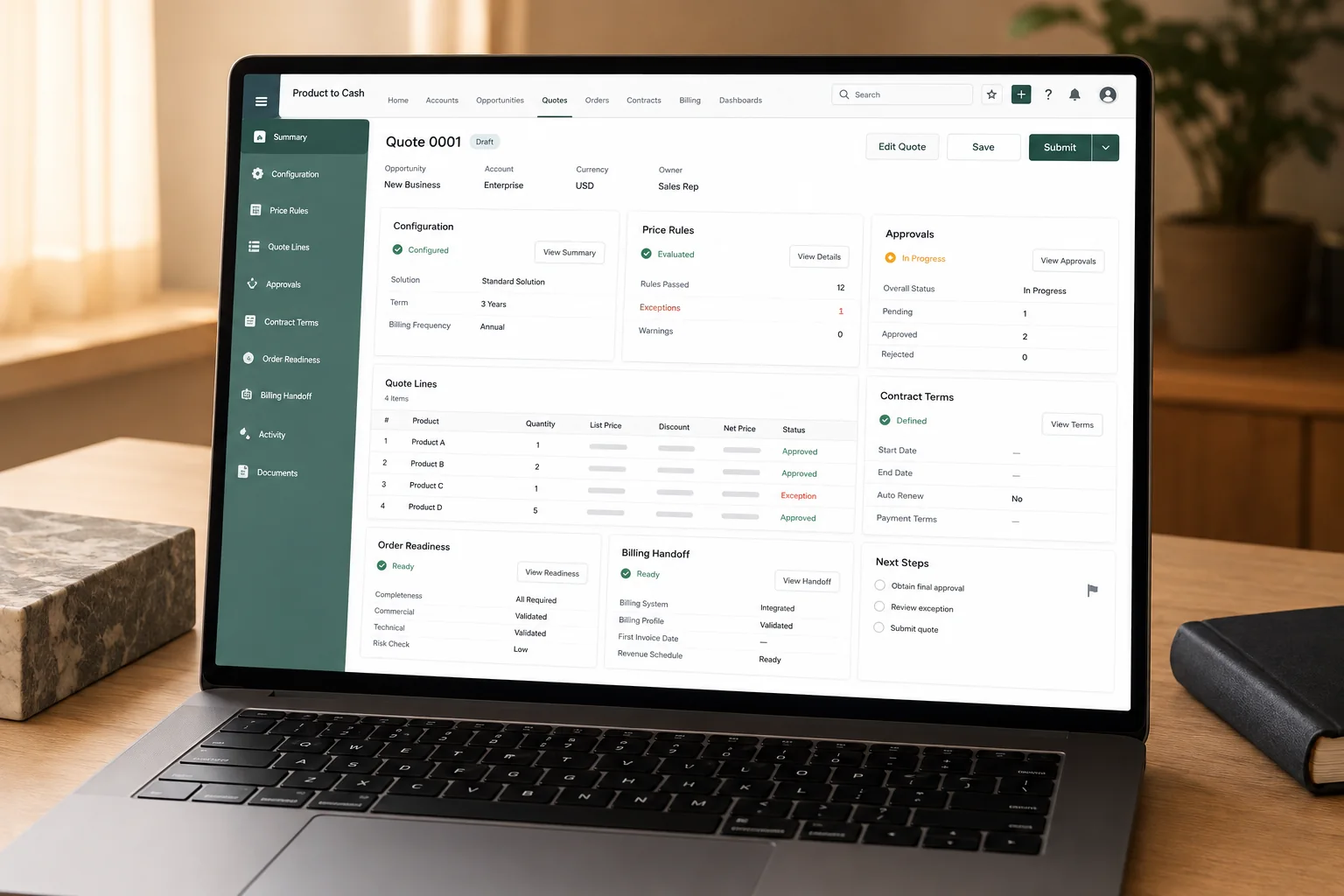
We bring product rules, pricing, approvals, contracts and downstream systems into one workable model — so sales can move faster without creating exceptions for finance and IT.
Typical starting point: Quotes take too many manual checks, product and price rules live in different places, and every non-standard deal creates another approval or workaround downstream.
 AI-generated
WHERE COMPLEXITY BUILDS UP
Where quote-to-cash starts to get messy.
Complexity usually grows through duplicated product logic, scattered approvals and exceptions that are handled differently by sales, finance and operations.
Product logic is scattered
- Products, bundles or eligibility rules are maintained in more than one place.
- Sales and downstream systems no longer work from the same product logic.
Approvals take their own route
- Discounts and exceptions are reviewed differently depending on the team or deal.
- Approval steps accumulate instead of addressing the rule behind the exception.
Changes lose context
- A quote becomes a contract or order without all the original assumptions carrying forward.
- Amendments and renewals require manual reconstruction of the original deal.
 AI-generated
START WITH THE COMMERCIAL MODEL
Define the commercial rules before configuring the platform.
Before building product rules or approval flows, agree on how products, prices, exceptions and contract outcomes should work across sales, finance and operations.
Which products and combinations sales may offer
Where list prices, discounts and validity are mastered
Which exceptions genuinely require approval
What the quote must preserve for contract and order creation
Which system owns each commercial rule after go-live
How amendments, renewals and corrections should be handled
FROM PRODUCT TO CASH
How a deal should move from product to cash.
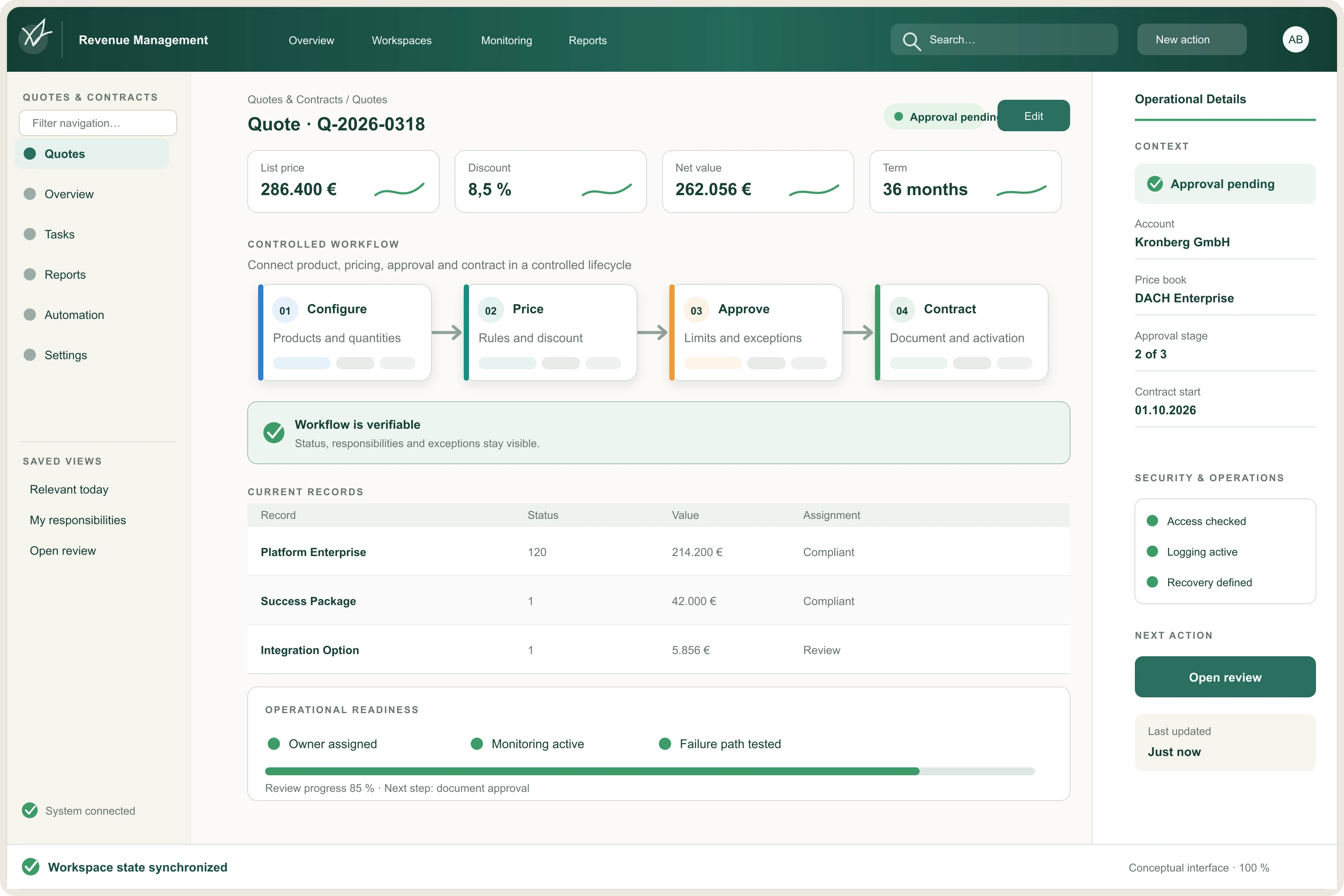
A good quote-to-cash flow preserves the commercial logic as the deal moves from product selection into quote, approval, contract and downstream fulfillment.
ProductWhat can be sold together?
PriceWhich price and conditions apply?
QuoteWhat exactly is being offered?
ApprovalWhich exceptions need a decision?
ContractWhat becomes binding after acceptance?
Order / BillingWhat must downstream systems receive?
 AI-generated
WHAT GOOD LOOKS LIKE
What quote-to-cash looks like when the model is under control.
The goal is not more automation. It is fewer exceptions, fewer duplicate rules and a commercial model sales, finance and IT can all explain.
Sales sees only valid products, combinations and commercial options.
Prices and discounts come from defined sources with clear ownership.
Approvals are triggered by real exceptions — not by every non-standard deal.
Contracts and orders preserve the commercial context from the quote.
Amendments, renewals and corrections follow the same model instead of creating side processes.
BEFORE YOU BUILD
Questions worth answering before configuration starts.
Revenue complexity gets expensive when product rules, approvals and downstream ownership are added before the commercial model is agreed.

Fit
Does the solution match the real commercial complexity?
- Are product rules simple enough for Salesforce Standard or do they genuinely need CPQ / Revenue capabilities?
- Are we solving an actual quoting problem or modeling complexity the business does not need?
Control
Are exceptions and approvals deliberate?
- Which discount, product or contract exceptions truly require a human decision?
- Who can change pricing logic, approval thresholds or product rules?
Lifecycle
What happens after the first quote?
- How are amendments, renewals, cancellations and corrections handled?
- How will changes to product and pricing rules affect existing contracts and downstream systems?
 AI-generated
USEFUL DELIVERABLES
Outputs sales, finance and IT can keep using.
The work should leave behind a shared commercial model — not configuration that only one team understands.
Product and pricing model with ownership and rule boundaries
Quote, approval and contract decision model
Integration requirements for ERP, billing and downstream systems
Prioritized roadmap, open decisions and operating standards
HOW WE GET THERE
From product model to quote-to-cash teams can run.
Start with the commercial model, make the key decisions visible and build the flow into sales, finance and downstream operations.
Structure
Define product, pricing and commercial-rule ownership.
Decide
Set the rules for offers, exceptions, approvals and contract outcomes.
Connect
Link CRM, ERP, billing and other downstream systems around one commercial model.
Operate
Test changes, support exceptions and keep ownership visible after go-live.

Where is quote-to-cash breaking into workarounds?
If quotes rely on manual checks, approvals keep multiplying or downstream teams rebuild the deal by hand, we can help bring the commercial model back under control.