COMMERCE CLOUD & DIGITAL COMMERCE
Commerce that keeps working after checkout.
We connect product, checkout, payment, order and service context so the customer journey does not fall apart once the transaction leaves the storefront.
Typical starting point: The storefront works, but product data drifts, checkout exceptions multiply and service teams cannot easily see what happened after the order was placed.
 AI-generated
WHERE COMMERCE STARTS TO FRAGMENT
Where the commerce journey starts to break apart.
Commerce friction usually appears between systems: product information, checkout logic, order processing and service no longer tell the same story.
Product context drifts
- Product, availability or price information differs across storefront and backend systems.
- Teams correct the same catalog or order data in more than one place.
Checkout accumulates exceptions
- Discounts, payment rules or edge cases are handled through one-off logic.
- Small commercial changes trigger disproportionate testing and coordination.
Order and service become disconnected
- Customer service cannot easily see the commercial context behind an order or change.
- Returns, changes or fulfillment issues require manual reconstruction across systems.
 AI-generated
START WITH THE COMMERCE MODEL
Define the commerce model before configuring the storefront.
Before adding components or integrations, agree on how product, checkout, order and service responsibilities should work across the full journey.
Which system owns product, price and availability
Which checkout rules are genuinely required
Where payment, fraud and order decisions are made
What order context downstream teams need
How changes, cancellations and returns should work
Which responsibilities sit with commerce, service and surrounding systems
FROM PRODUCT TO SERVICE
How a commerce journey should carry through.
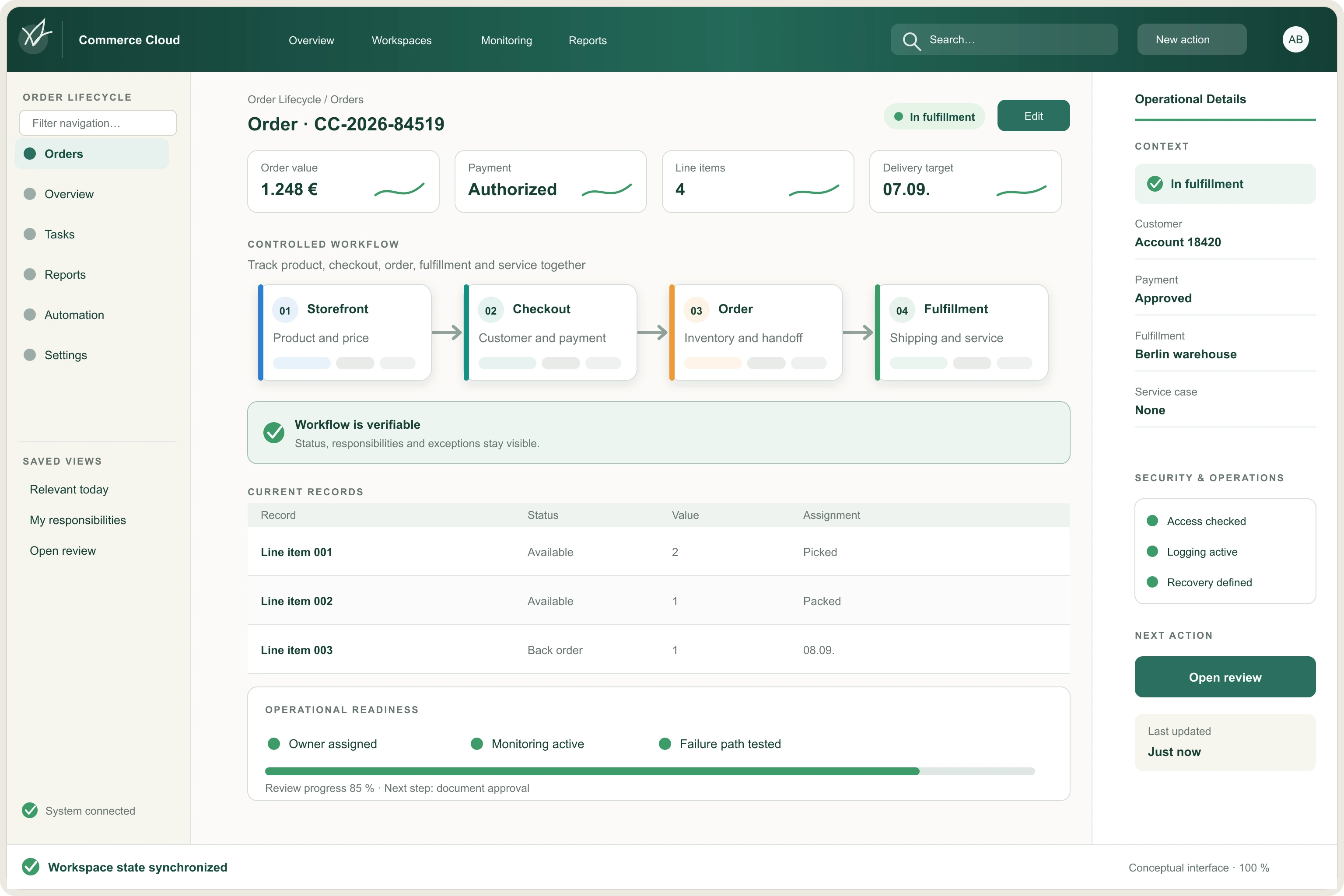
A good commerce flow preserves the important decisions and data as the customer moves from product selection into payment, order fulfillment and service.
ProductWhat is being offered and under which conditions?
CartWhat has the customer selected and why?
CheckoutWhich price, discount, delivery and payment rules apply?
PaymentWhat confirms the transaction can proceed?
OrderWhat must downstream systems receive?
ServiceWhat context is needed if the customer comes back later?
 AI-generated
WHAT GOOD LOOKS LIKE
What commerce looks like when the journey stays intact.
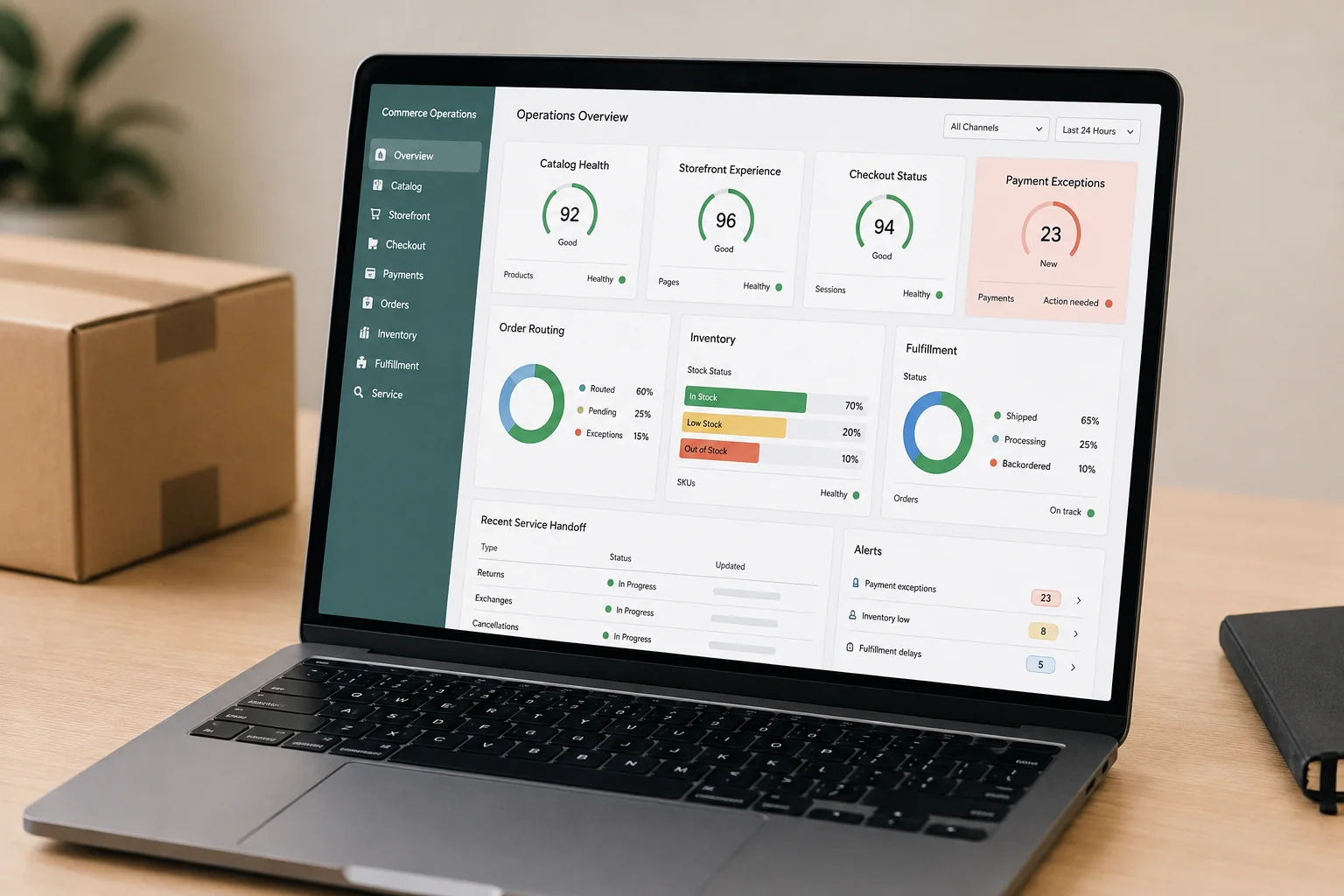
The goal is not more integration. It is a commerce process where product, order and customer context stay usable across the systems that need them.
Product, price and availability come from defined sources.
Checkout rules are explainable and do not rely on hidden exceptions.
Orders carry the information fulfillment and service teams need.
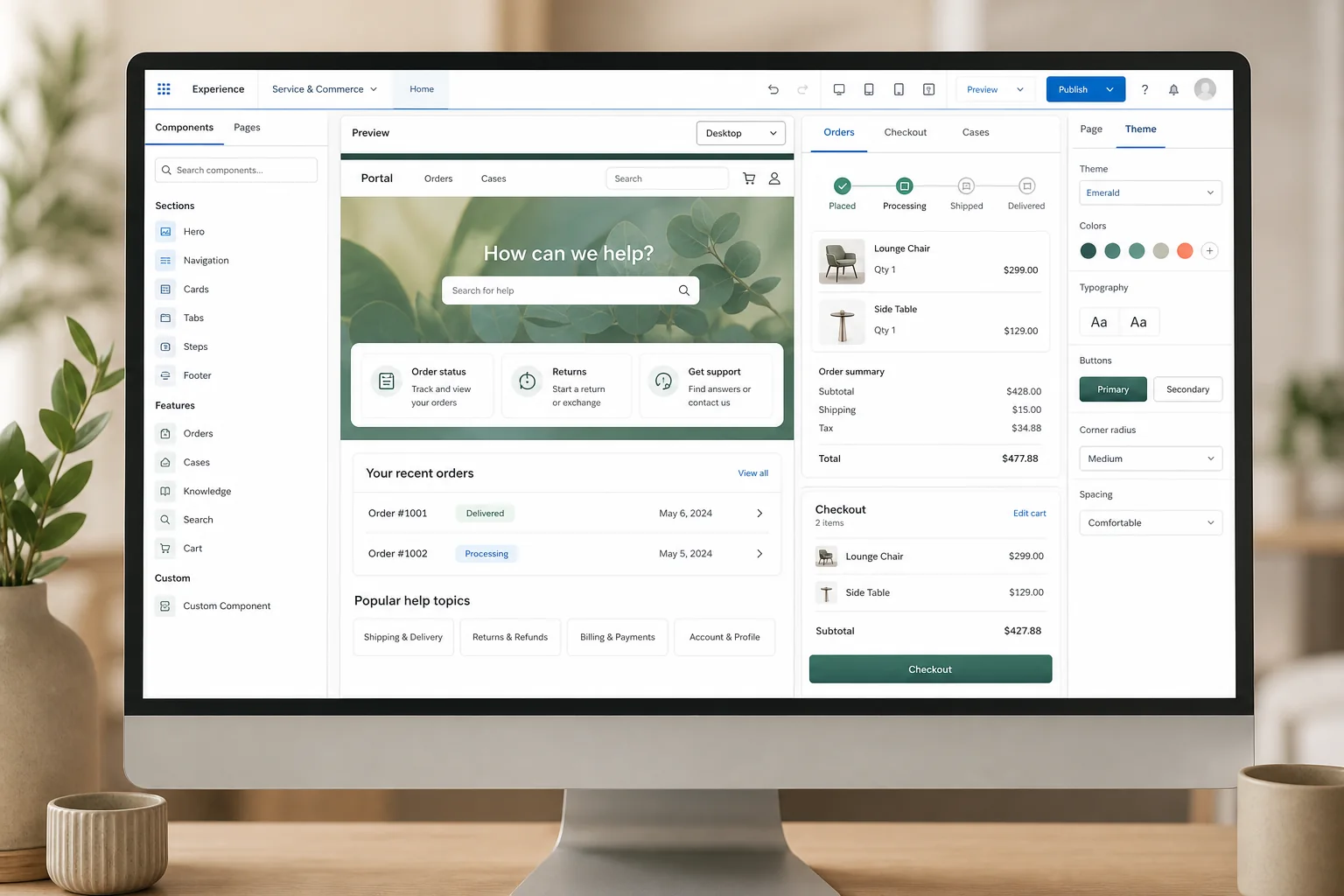
Customer-service teams can understand what happened without reconstructing the transaction.
Changes, returns and cancellations follow a known path instead of creating side processes.
BEFORE YOU BUILD
Questions worth answering before configuration starts.
Commerce complexity grows quickly when storefront features are added before ownership and downstream effects are understood.

Fit
Does the solution match the real commerce need?
- Are we solving a genuine customer or operational problem?
- Does the complexity belong in commerce — or should another system own it?
Control
Can exceptions be handled deliberately?
- Who can change checkout, pricing, payment or fulfillment rules?
- Which failures can recover automatically and which require human review?
Lifecycle
What happens after the purchase?
- How are order changes, returns, refunds and service requests handled?
- How will new products, channels or checkout rules affect downstream systems?
 AI-generated
USEFUL DELIVERABLES
Outputs commerce, service and IT can keep using.
The work should leave behind a shared commerce model — not configuration that only one team understands.
Commerce journey and system-ownership model
Product, checkout, order and service data requirements
Integration, exception and handoff principles
Prioritized roadmap, open decisions and operating standards
HOW WE GET THERE
From purchase journey to commerce operations teams can run.
Start with the real customer journey, define the ownership behind it and connect the systems that have to keep the transaction moving after checkout.
Map
Understand the real purchase journey, including exceptions and manual workarounds.
Define
Set ownership for product, checkout, order and service decisions.
Connect
Link the required systems and preserve the context that needs to move between them.
Validate
Test common paths, failures, changes and downstream service scenarios before scaling.
Where does your commerce journey start to break apart?
If product data drifts, checkout exceptions keep growing or service teams lose the order context, we can help bring the journey back into one operating model.